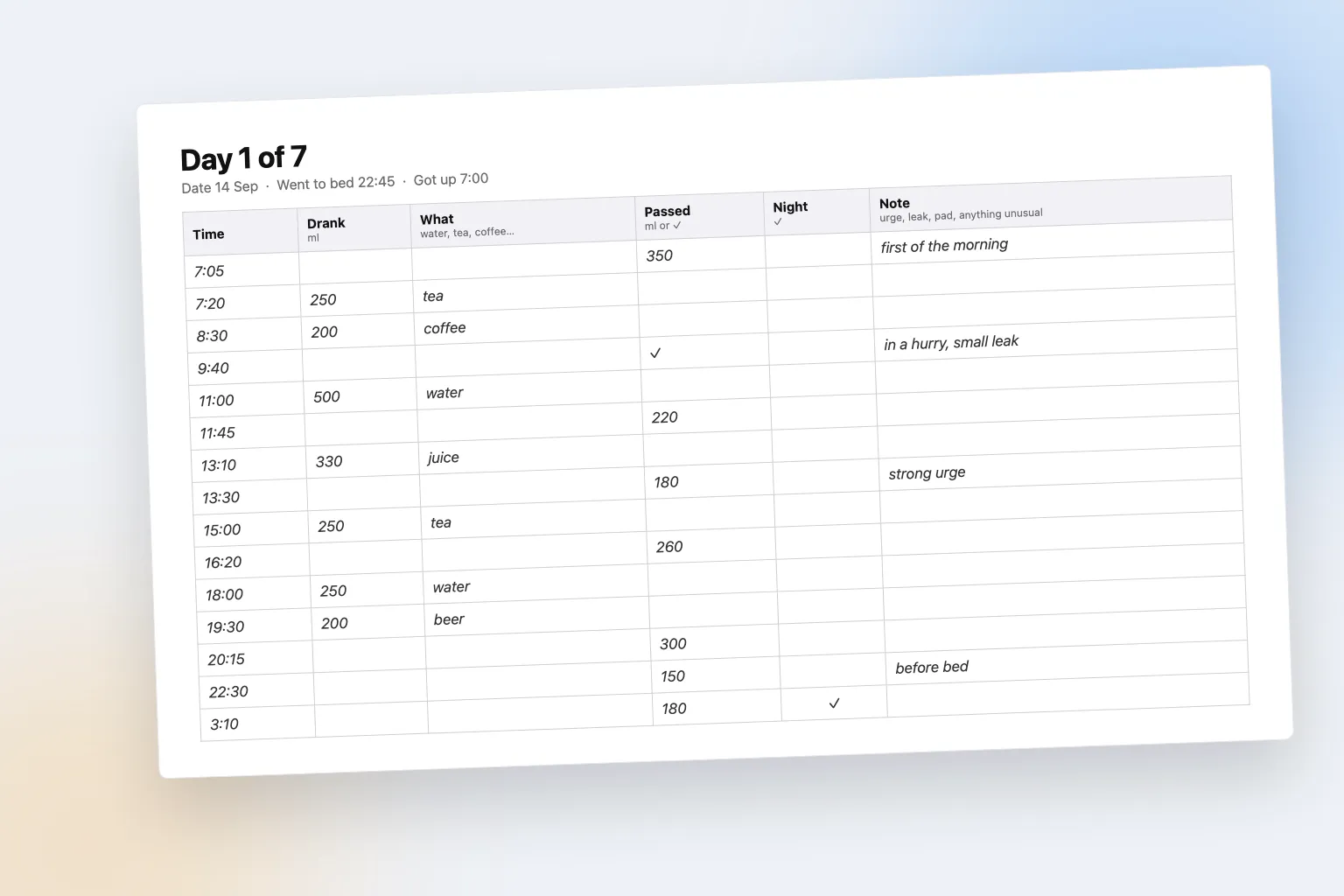
Clinic forms show one or two example lines: the Urology Care Foundation’s diary has a single row with a can of soda and a leak while laughing,1 the NHS Gloucestershire chart shows a morning with a cup of tea and a leak,2 the Sussex physiotherapy chart three morning lines with totals.3 Helpful, but nobody’s day is three lines long. Here is a whole made-up day in the format of our printable template, followed by what each part of it tells a clinician. The numbers are this example’s numbers and nothing else; there is no normal to compare them with on this page.
What does a full bladder diary day look like?
A filled-in bladder diary example. Day 1 of 7. Went to bed 22:45. Got up 7:00.
| Time | Drank (ml) | What | Passed (ml or ✓) | Night | Note |
|---|---|---|---|---|---|
| 7:05 | 350 | first of the morning | |||
| 7:20 | 250 | tea | |||
| 8:30 | 200 | coffee | |||
| 9:40 | ✓ | in a hurry, small leak | |||
| 11:00 | 500 | water | |||
| 11:45 | 220 | ||||
| 13:10 | 330 | juice | |||
| 13:30 | 180 | strong urge | |||
| 15:00 | 250 | tea | |||
| 16:20 | 260 | ||||
| 18:00 | 250 | water | |||
| 19:30 | 200 | beer | |||
| 20:15 | 300 | ||||
| 22:30 | 150 | before bed | |||
| 3:10 | 180 | ✓ |
Fifteen lines, one page. The day runs from getting up to getting up, so the 3:10 trip belongs to Day 1 even though the date has changed.
Line by line
7:05, 350 ml, “first of the morning”. The first trip after getting up. Not a night trip, because the diary’s night ended at 7:00, but by the ICS definition the urine passed then was made overnight and is added to the night-time volume,5 which is why it is measured rather than ticked. On paper it is simply the first line of the day.
7:20 and 8:30, tea and coffee. Drinks with the amount and the type. The amount comes from measuring the mug once; the type is there because clinic forms ask for it.1,2
9:40, a tick, “in a hurry, small leak”. No time to measure, so a tick instead of a volume, and the trip still counts towards the day’s total of trips.2 The note records the leak with a rough size. On a form with leak columns this would be a “small” or a “+”; on a plain diary it is a note with the time.
11:00, 500 ml of water. A bottle, so the amount is printed on it.
13:30, 180 ml, “strong urge”. A measured trip with urgency noted: a sudden, compelling need to go.4 Written at the time, in two words, which is all it needs.
19:30, 200 ml of beer. Alcohol is a drink like any other on the sheet: amount, type, time. The diary is meant to show a normal evening, not a tidied one.
22:30, 150 ml, “before bed”. The last trip before the bed time written at the top of the page. It is a daytime trip; the night starts at 22:45.
3:10, 180 ml, ticked Night. Between going to bed and getting up, so it gets the tick. This is the line that makes the night count possible; a diary without bed and wake times cannot tell this trip from the one at 22:30.
What this day adds up to
Only because the example allows it: 1,980 ml drunk across seven drinks; 1,640 ml passed across seven measured trips, plus one trip ticked without a volume; eight trips in all, one of them at night. On a clinic form you may be asked to write these totals in the bottom row; in the app they appear on the Today screen and in the report without any adding up. They are not targets and they are not typical of anyone in particular. Their only job here is to show what a complete day looks like when it is counted.
What a clinician sees in it
Eight trips with times, one at night, one unmeasured. Seven measured volumes, from 150 to 350 ml. Drinks spread from 7:20 to 19:30 with the types written down. Two notes, a leak with a trigger and an urge. Bed and wake times, so the night can be separated from the day. And a day that is complete from waking to waking, which is the first thing they check, because memory alone gets even the count of trips wrong.6 What those facts mean is the appointment; the diary’s job was to bring them.
Your day will look different
More lines or fewer, other drinks, other times. The format is what stays the same: every drink, every trip, a volume or a tick, the two times that frame the night, and a note where something happened. How to keep a bladder diary covers the habits that get you there, and how to measure at home covers the jug.